ATP, Oxygenation & Recovery: How KYMIRA Enhances Cellular Energy

Steve Hoyles
Cellular energy production is the cornerstone of performance, endurance, and recovery. Adenosine triphosphate (ATP), the primary energy currency of cells, powers
muscle contractions, metabolic processes, and repair mechanisms.
For athletes, optimising ATP synthesis (particularly through efficient aerobic
pathways) relies heavily on tissue oxygenation. Yet, intense exercise often
leads to oxygen deficits, shifting reliance to less efficient anaerobic metabolism, which accumulates fatiguing by products like lactate.
This is where innovative technologies like KYMIRA's infrared apparel come into play,
enhancing oxygenation and ATP dynamics to accelerate recovery and boost overall
cellular energy.
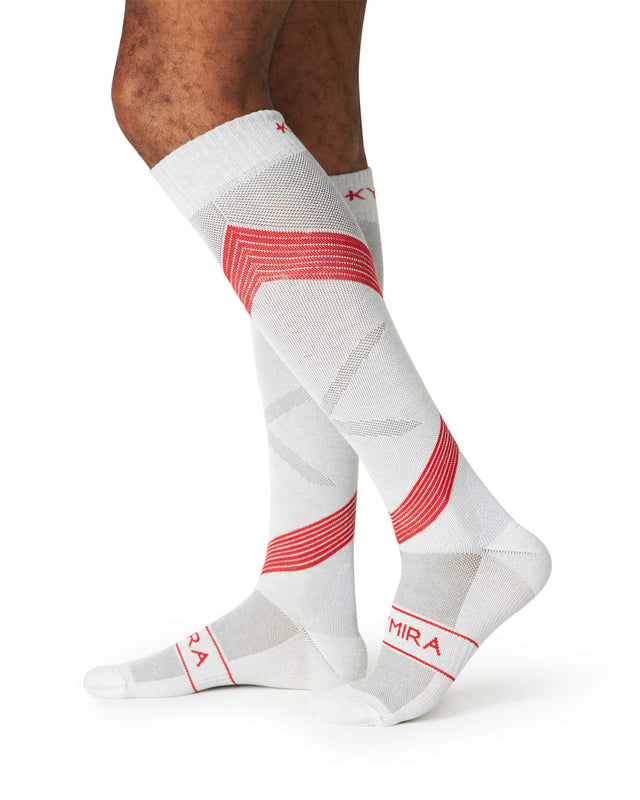
KYMIRA's patented KYnergy fabric technology embeds bio-ceramic minerals into fabrics, absorbing body heat and re-emitting it as far-infrared (FIR) radiation in the 6–14 µm range. This FIR penetrates tissues up to 4–5 cm, stimulating physiological responses that directly support ATP production and recovery.
The Science of ATP and Oxygenation in Athletic Performance
ATP is generated primarily through oxidative phosphorylation in mitochondria, where oxygen acts as the final electron acceptor in the electron transport chain.
During exercise, adequate tissue oxygenation ensures efficient ATP yield (up to 38 molecules per glucose molecule aerobically, versus just 2 anaerobically). Hypoxia or poor circulation impairs this process, leading to fatigue, reduced power output, and prolonged recovery times.
FIR therapy addresses this by promoting vasodilation via nitric oxide (NO) upregulation.
NO relaxes vascular smooth muscle, increasing blood flow and oxygen delivery to
muscles. Studies show FIR activates endothelial NO synthase (eNOS), enhancing
microcirculation and tissue perfusion. This not only bolsters aerobic ATP production but also aids in clearing metabolic waste, reducing oxidative stress, and supporting mitochondrial function.
The athlete with the most efficient ATP production capacity is the most fatigue
resistant.
How KYMIRA Boosts Cellular Energy Through Infrared Technology
KYMIRA garments provide a passive, wearable means to harness FIR's benefits quickly and efficiently.
By converting light and wasted body energy into targeted FIR, they trigger cellular responses that elevate oxygenation and ATP efficiency. Clinical studies demonstrate that KYMIRA's infrared apparel can increase tissue oxygenation by up to 20% [1], surpassing the 10-15% increase typically achieved in a hyperbaric chamber.
This surge in oxygen availability (measured via transcutaneous partial pressure of
oxygen (tcPO2)) occurs within 70 minutes of wear, surpassing traditional hyperbaric methods that require specialised equipment and sessions.
Enhanced oxygenation directly impacts ATP synthesis by optimising mitochondrial
respiration, effectively positioning KYMIRA as ATP recovery clothing.
FIR's interaction with cytochrome c oxidase (a key enzyme in the electron transport
chain) increases ATP production while modulating reactive oxygen species (ROS)
for better cellular homeostasis. In practical terms, athletes experience reduced oxygen consumption during submaximal exercise (by ~1%), allowing for sustained performance without early fatigue. [2]
Moreover, KYMIRA's FIR promotes anti-inflammatory effects and cellular repair,
accelerating recovery from exercise-induced damage. By improving blood flow, it facilitates nutrient delivery and waste removal, minimising delayed-onset muscle soreness (DOMS) and supporting neuromuscular restoration.
A 2025 study titled ‘A Preliminary Investigation of the Efficacy of Far-Infrared-Emitting Garments in Enhancing Objective and Subjective Recovery Following Resistance Exercise’ [3] concluded that…
FIR garments may enhance neuromuscular recovery and subjective recovery perceptions following resistance exercise, likely by improving the peripheral blood flow,
metabolic clearance, and tissue oxygenation. These findings suggest that FIR garments may be effective in enhancing both neuromuscular and perceived
recovery following resistance exercise, supporting their potential use as a
post-exercise recovery tool.
With both anecdotal and scientific evidence, we can confidently say that KYMIRA is
one of the most potent post-workout recovery tools available, helping to reduce muscle soreness naturally and acting as a key player in DOMS recovery.
Key Benefits for Recovery and Performance
- Faster Warm-Ups and Reduced Injury Risk: Elevated nitric oxide for performance. Increased tissue oxygenation and primes muscles, improving elasticity and reducing stiffness for quicker readiness.
- Enhanced Endurance and Power: At lower cycling intensities, the subjects consume statistically significantly less oxygen when wearing the FIR apparel compared to the Control garment, despite performing the same amount of mechanical work. [4]
- Accelerated Recovery: Post-exercise, KYMIRA aids in restoring baseline neuromuscular function (e.g., maximal voluntary isometric contraction and countermovement jump) within 24–48 hours, with significant improvements at 48 hours (p<0.001).
- Cellular Healing: FIR boosts cell proliferation and repair, contributing to tissue regeneration in muscles, tendons, and beyond.
These effects make KYMIRA ideal for sports science practitioners seeking evidence-based tools to optimise training cycles.
Conclusion
By leveraging FIR to enhance oxygenation and ATP production, KYMIRA offers a
game-changing approach to recovery and energy optimisation.
For sports scientists, strength and conditioning coaches, sports medicine
departments and athletes themselves, integrating KYMIRA garments into pre,
during and post-event kit means tangible gains in efficiency, resilience, and
output, without invasive interventions.
Explore the full range at KYMIRA.com and review their clinical evidence to see how this technology can elevate your athletic edge.
KYMIRA Protocols
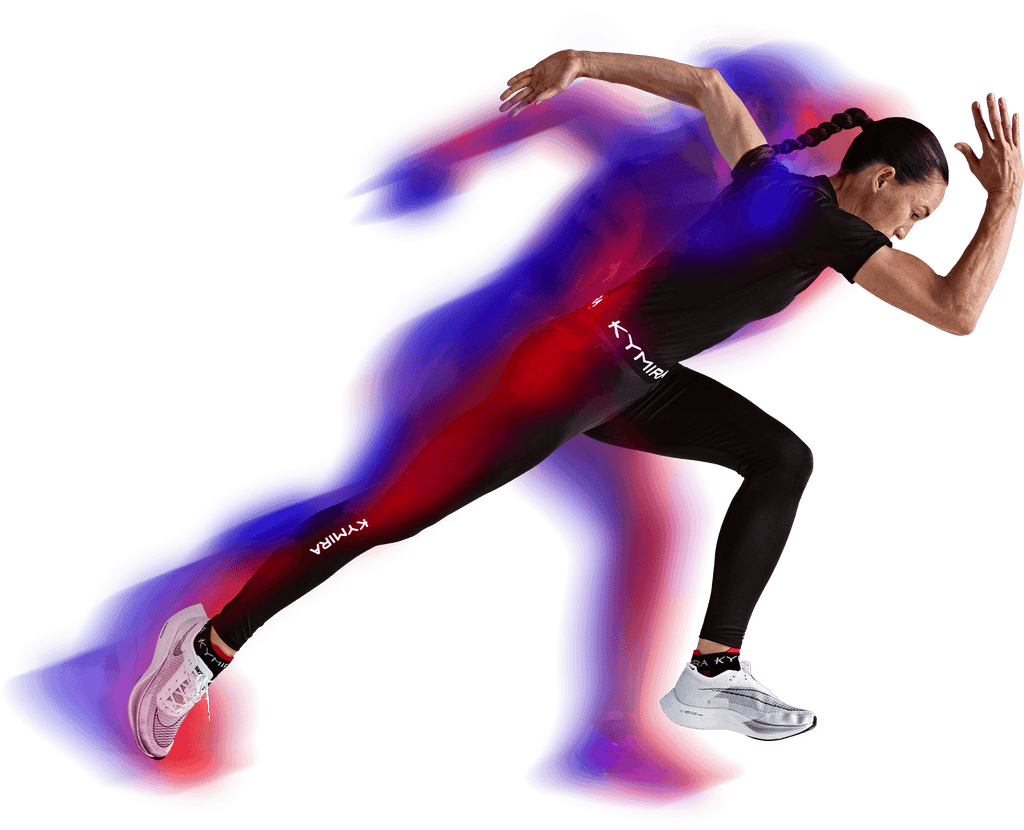
Muscle Priming: Wear ≥30 min pre-run
Endurance Training: Wear during training
Recovery: Wear for at least ≥2 hours post-run, overnight for best recovery.