Top 5 Ways to Prevent Injuries While Skiing This Season

Updated
Skiing delivers the perfect blend of adventure, speed, and winter escapism. It’s also a fantastic workout that challenges cardiovascular fitness, lower‑body strength, and full‑body coordination. But skiing’s high‑velocity, unpredictable environment means injuries are common—especially to the knees, shoulders, back, and wrists.
Recent analyses show skiing injuries occur at a rate of 1.23 per 100,000 participants, with ACL tears, ligament sprains, fractures, and soft‑tissue injuries among the most frequent issues. Research also highlights how equipment, environmental conditions, and physical readiness all significantly influence injury risk. [sportsmed.org] [nature.com]
To help you stay safe and improve performance on the slopes, here are the top 5 evidence‑based ways to reduce skiing injuries, including a cutting‑edge advantage: KYMIRA Infrared muscle‑priming technology.
1. Warm Up Properly with Dynamic, Ski‑Specific Movements
Cold muscles are significantly more prone to strains, tears, and reduced reaction speeds. A smart warm‑up boosts circulation, increases tissue elasticity, and primes neuromuscular coordination—especially important for skiing’s high‑demand movements.
Try this 12–15 minute ski‑specific warm‑up:
- Dynamic leg swings (front‑to‑back & lateral) – improves hip mobility
- Glute activation drills (mini‑band lateral walks) – improves knee tracking
- Jumping jacks or skier‑hops – elevates heart rate
- Bodyweight squats with controlled tempo – preps quads and glutes
- Torso rotations – warms up the spine for carving turns
A proper warm‑up enhances proprioception and reduces injury risk by improving neuromuscular readiness—an effect supported by balance and coordination research in winter‑sport injury prevention programs. [summitsportslab.com]
2. Prioritise Protective Gear & Correctly Fitted Equipment
Using the right equipment—properly fitted and properly worn—is one of the most impactful ways to reduce skiing injury severity.
Why equipment matters (evidence‑based):
- Helmets can reduce non‑serious head injuries by up to 70% in typical fall scenarios on the snow surface. [skimag.com]
- Protective gear such as helmets and wrist guards significantly reduces head and wrist trauma severity, according to multiple epidemiological and meta‑analysis studies. [nature.com]
- Equipment factors like ski length, binding setup, and boot alignment can influence biomechanical forces and reduce lower‑limb injury risk by decreasing kinetic energy and neuromuscular load. [bjsm.bmj.com]
Your essential checklist:
- Helmet (mandatory for adults and juniors)
- Wrist guards (especially for beginners and snowboard‑cross skiers)
- Knee supports or pads (extra stability on variable terrain)
- Layers of waterproof, windproof clothing
- Boots and bindings professionally fitted
- Sunscreen + lip balm for cold‑weather protection
Proper gear is one of the simplest, highest‑impact ways to protect yourself—don’t rely on luck on the slopes.
3. Strengthen the Key Skiing Muscles with Evidence‑Based Training
If your muscles aren’t prepared for the demands of skiing—speed changes, impact forces, rotations, landings—you’re more likely to sustain ACL tears, sprains, or overuse injuries. Strength training enhances control, joint stability, power output, and reduces fatigue, one of skiing’s most influential injury factors.
Science‑backed training benefits:
A landmark review shows stronger athletes across sports have lower injury rates and better performance outcomes. Early strength gains (first 2–6 weeks) come from neural adaptations—better signalling between your brain and muscles—which directly reduces injury likelihood through improved reaction time and stability. [summitsportslab.com]
Key exercises for skiing durability:
Lower Body & Core:
- Back squats
- Romanian deadlifts
- Walking lunges
- Leg press
- Planks & anti‑rotation core drills
Balance & Proprioception:
- Single‑leg Romanian deadlifts
- Bosu balance squats
- Lateral hops
These movements strengthen the quadriceps, hamstrings, glutes, hips, and core—your primary defence against knee and lower‑limb injury.
4. Stay Alert: Conditions, Terrain & Behaviour Matter
Environmental and behavioural factors are major contributors to skiing injuries. Studies show both intrinsic elements (skill, confidence, fatigue) and extrinsic elements (terrain, weather, equipment integrity) play major roles in accident severity. [nature.com]
Follow these slope‑safety principles:
- Check weather & snow conditions before skiing—ice, fresh powder, and low visibility each present different dangers.
- Progress gradually; avoid terrain beyond your skill level.
- Stay on marked pistes—off‑trail areas commonly conceal rock bands, tree wells, and unstable snowpacks.
- Rest when fatigued—fatigue dramatically increases ACL injury risk, especially during the last run of the day.
- Be aware of others, especially beginners and high‑speed skiers.
Awareness is a performance skill: staying switched‑on is as important as physical preparation.
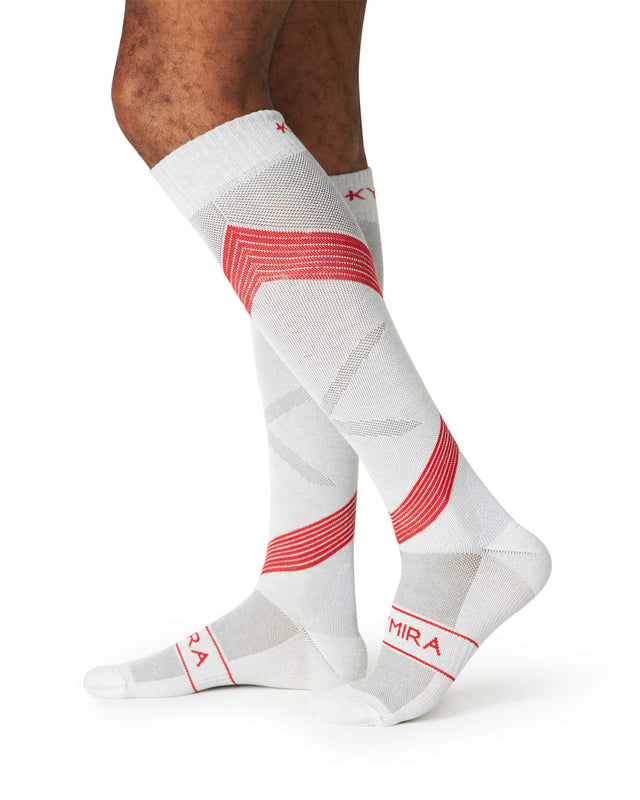
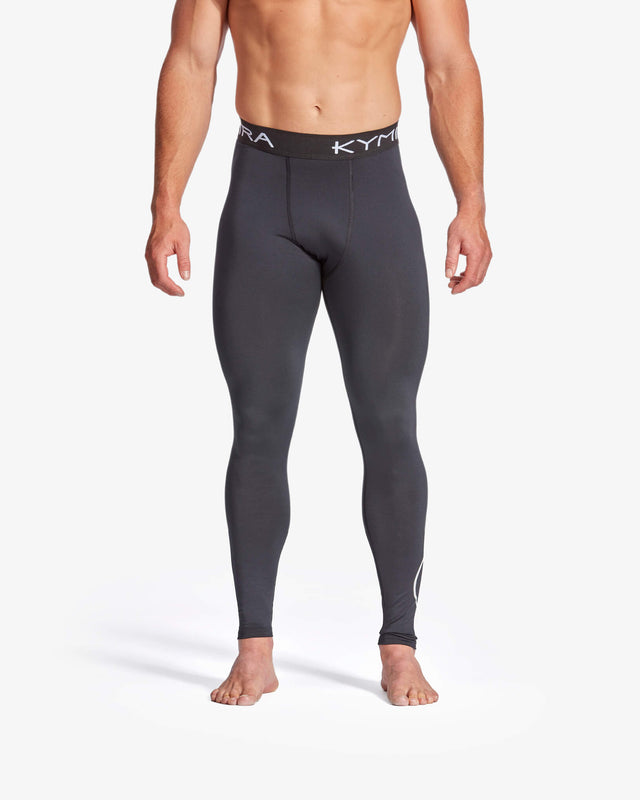
5. Prime Your Muscles & Stay Warm with KYMIRA Infrared
Here’s where KYMIRA gives you a performance and safety edge no other baselayer can match.
Supported benefits of KYMIRA Infrared:
✔ Reduces soft‑tissue injury incidence
KYMIRA infrared garments stimulate Nitric Oxide release, boosting vasodilation and tissue oxygenation. In one professional athlete population, soft‑tissue injuries decreased by 80% over two years, with no other protocol changes—demonstrating significant protective effects from infrared‑mediated muscle priming.
✔ Enhances muscle readiness in the cold
Infrared fibres warm faster and retain thermal energy 63% longer than equivalent‑weight fabrics, helping muscles stay warm, elastic, and responsive—crucial for preventing strains and improving reaction time on cold ski mornings.
✔ Boosts circulation & oxygen delivery
Increased vasodilation promotes continuous warm blood flow, supporting endurance and reducing stiffness during long ski sessions.
✔ Superior Thermal Regulation — Not Just Heating or Cooling
KYMIRA Infrared doesn’t behave like traditional thermal fabrics. Instead of simply insulating heat or releasing excess warmth, our infrared technology helps the body redistribute heat more efficiently around infrared‑exposed areas. This creates a regulating effect, meaning you stay stable and comfortable across rapidly changing winter‑sport environments—steep climbs, windy ridgelines, shaded forest runs, and fast descents.
✔ Proven Performance in Extreme Temperatures
KYMIRA baselayers are worn by customers in some of the harshest conditions on the planet. The technology has delivered reliable thermal control and performance benefits in environments ranging from –35°C to +48°C. Whether you’re skiing in deep mid‑winter cold or touring under bright spring sun, KYMIRA helps your body maintain an optimal working temperature while keeping muscles loose, elastic, and ready to perform.
✔ Supports Altitude Adaptation
As altitude increases, Nitric Oxide levels naturally drop, reducing oxygen delivery efficiency. KYMIRA Infrared helps maintain Nitric Oxide availability, supporting better vasodilation and tissue oxygenation even in low‑oxygen, high‑mountain environments. For skiers and snowboarders training or performing at altitude, this means steadier breathing, improved warmth, and more consistent muscle performance throughout the day.
How to use KYMIRA for skiing:
- Wear KYMIRA baselayers 30–90 minutes before skiing for optimal muscle priming
- Keep them on throughout the session for temperature regulation
- Pair with a proper warm‑up for maximum protective effect
KYMIRA’s infrared technology makes it easier to stay warm, mobile, and injury‑resilient—especially in sub‑zero conditions.
Conclusion: Ski Smarter, Ski Safer, Ski Stronger
Skiing is one of winter’s most exhilarating sports—but staying injury‑free requires preparation, awareness, and smart choices. You can dramatically reduce injury risk by:
- Warming up dynamically before hitting the slopes
- Using properly fitted protective gear
- Building strength and coordination through targeted exercises
- Staying aware of conditions and terrain risks
- Priming your muscles and enhancing circulation, thermoregulation, and altitude adaption with KYMIRA Infrared
With these strategies—and KYMIRA’s performance‑enhancing technology—you’ll be better equipped for a safe, strong, and unforgettable ski season.
Happy skiing, and stay powered by KYMIRA Infrared.