Case Study: Bob Stewart, International Rugby

BOB STEWART
Head of Medical at the a Tier 1 International Rugby Team
Team Deployment
Injury Prevention Muscle Priming, Sustained Training, Recovery, Travel, Sleep
Daily use
“In the Six Nations tournament we saw a 25% reduction in pain, a 33% mobility improvement, and soft‑tissue injuries fell 80%”
Bob Stewart
Head of Medical, International Rugby
PROBLEM TO SOLVE
• Camp weeks include one session “tougher than a game” with 48–72 h to be match‑ready; high collision load + speed meters for backs in particular.
• Day‑to‑day pain, stiffness and tendon complaints, especially around high‑force accelerations/decelerations.
• Need a low‑friction recovery system that athletes will wear consistently (beyond standard compression).
“The proof is there… you just see more and more players opting on their own to wear them all the time…”
Bob Stewart
Head of Medical, International Rugby
KYMIRA INTERVENTION PROTOCOL
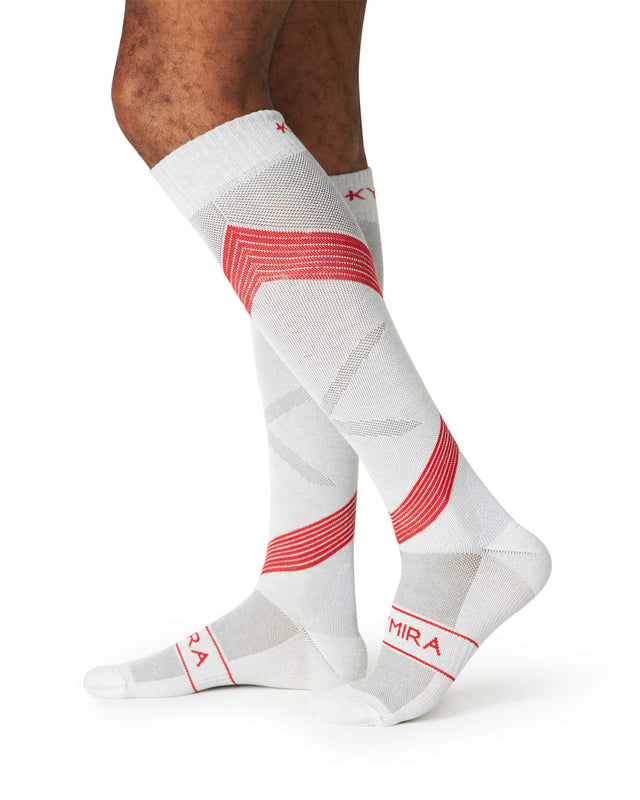
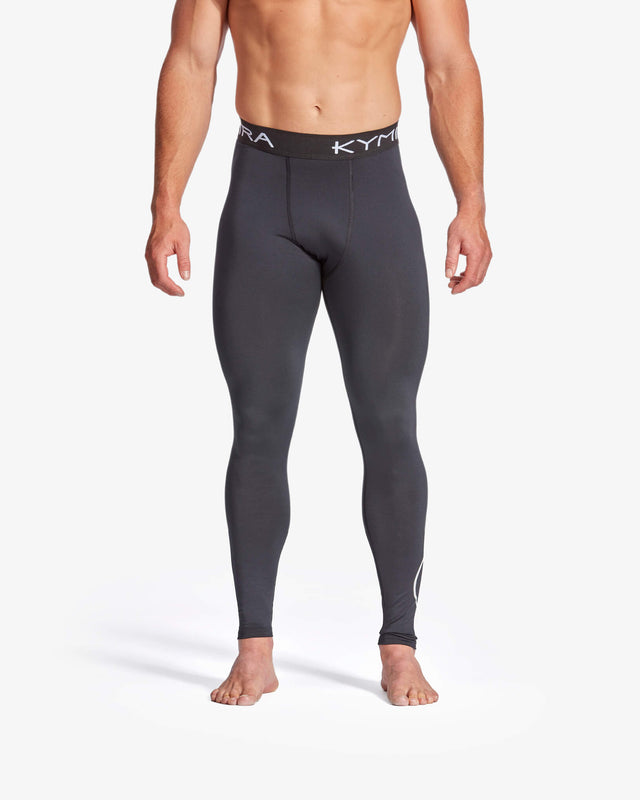
Post‑match & post‑session recovery: leggings/socks immediately; sleep overnight in leggings.
Travel: leggings/socks on coach/flight days to reduce stiffness and swelling.
Clinic use: non‑compressive IR for tendon and joint cases (avoid compression‑induced joint swelling); encourage self‑managed joint‑space “carry‑over.”
Optional training use: 5–6 athletes “religiously train in them,” with broader organic adoption in recent tournaments
IMPLEMENTATION NOTES
Recovery rhythm: post‑field (2–4 h) → sleep → travel. Issue 3 outfits/player to maintain compliance during laundry cycles.
• Clinic pathways: for tendon/joint complaints, prefer non‑compressive IR to avoid joint swelling; leverage the hip‑stiffness carry‑over by getting athletes to sleep in leggings.
• Culture lever: start with backs/speed specialists; adoption spreads squad‑wide as athletes feel the difference.
METHODS AT A GLANCE
In‑camp observational tracking across the 2018 Six Nations and subsequent camps: wellness (pain/mobility) and medical notes on soft‑tissue injury incidence.
Context: club → international intensity spike; backs often complete a typical club week’s full‑speed meters in one session at camp
RESULTS
-25% perceived pain (squad average).
−33% stiffness / improved mobility (squad average).
Soft‑tissue injuries ~80% lower in first full campaign (historical ~4/tournament → 1). This has maintained over 5 year seasons.
Sustained training intensity: players were still hitting PBs six weeks into camp.
Adoption: athletes now request 2–3 pairs; growing use in training, recovery and travel without prompt.
“In that first trial our backs were still hitting PBs six weeks into camp, recovering in the kit. There’s nothing else that I’ve seen or heard of that comes close to KYMIRA in terms of effectiveness… we’re seeing tangible differences every day we’re using it.”
Bob Stewart
Head of Medical, International Rugby


CLINICAL EVIDENCE SUPPORT
The squad‑level reductions in pain (−25%) and stiffness/mobility impairment (−33%) observed across the tournament, together with the group’s ability to sustain higher training intensity, are directionally consistent with controlled studies on far‑infrared (FIR)–emitting textiles that demonstrate locally improved oxygen availability and performance‑relevant recovery effects
In placebo‑controlled trials, FIR garments increased transcutaneous oxygen tension (tcPO₂) by ~5–8% within 30–90 minutes, establishing a plausible pathway for comfort, tissue oxygenation, and readiness between sessions in collision sports that carry a high soft‑tissue load.
Beyond oxygenation, randomized work has also shown objective performance benefits after recovery in FIR—including higher countermovement‑jump metrics and improved neuromuscular status at 24–48 h—supporting the day‑to‑day “bounce‑back” the squad reported. In parallel, laboratory studies with FIR apparel have recorded lower oxygen cost (VO₂) at sub‑maximal intensities for the same external work, a mechanism that can reduce perceived exertion and shorten practica readiness turnarounds when training density is high.
Analgesic and inflammatory pathways provide a second explanatory thread. FIR exposure has been associated with pain modulation and anti‑inflammatory signalling in pre‑clinical and clinical contexts, aligning with the decreases in soreness/stiffness seen at squad level. Finally, a large tcPO₂ RCT and related human datasets (e.g., grip‑strength increases alongside tcPO₂ rises within 90 min) reinforce that the biological effects are measurable under controlled conditions, not solely in field observations.
Selected references: Gordon et al., 2019; Washington et al., 2018; Worobets et al., 2015; Gale et al., 2006; Djuretić et al., 2021; Lever et al., 2025; Bond et al., 2026.

Success Stories
“ Winning is the most important thing if you’re involved in team sport and if you’re looking at your program me and where you can make gains without using something like KYMIRA, you’re starting on the back foot.”