Jet Lag & Travel Fatigue in Elite Sport:
A Practical 72-Hour Protocol
(and Where Infrared Fits)

Steve Hoyles
Travel is the unavoidable tax on elite performance. Whether it’s NBA road trips, NFL cross-country flights, NHL back-to-backs, or European soccer clubs jetting cross-continent for Champions League nights, the data are clear: travelling teams
systematically underperform.
The cost isn’t merely an inconvenience. It’s poor performance, it’s measurable
drops in win probability, points scored, sprint speed, and decision-making. It’s
reduced prize money, sponsorship exposure and livelihoods.
At the heart of that decline is one often-overlooked factor: disrupted sleep.
Despite the best efforts of organisations, conventional ‘fixes’ fall short of
expectations. However, KYMIRA infrared sleepwear delivers an immediate,
non-pharmacological edge that fits seamlessly into a practical 72-hour travel
protocol.
We’ll outline both the how and why adding KYMIRA clothing to your travel schedule
helps to mitigate performance drops, and show an example travel protocol for
elite teams and athletes.
The Performance Tax of Travel: Data from the Big Leagues
Travelling teams lose more often, and by bigger margins, than home sides. The effect is consistent across different sports, continents and seasons. This isn’t opinion
– it is backed by fact…
NBA:
Back-to-back games with increased travel distance reduce winning probability. Every additional 500 km after a road game cuts win likelihood by ~4 %. Westward travel (phase delay) is particularly punishing, with teams showing lower shooting efficiency and more fatigue. [1]
NFL:
Away teams travelling long distances (>1,518 km) win only 39.4 % of games versus 43.6 % for shorter trips. West Coast teams heading east show progressively worse ATS (against-the-spread) performance the further they fly. [2]
NHL:
Greater time-zone changes and total distance travelled negatively affect goal differential, save percentage, and goal tender performance. Circadian disruption in either direction impairs output, but the interaction with distance is especially damaging. [3]
European & International Soccer:
High travel-stress matches (long-haul or multiple time zones) see sharp declines in away-team offensive output and win rates in the Champions League, Europa League, and Conference League. Kitman Labs’ analysis of 61,000+ fixtures across Europe’s top leagues found travel distance to be the single biggest performance predictor — bigger than opponent quality or recent form. Eastward long-haul flights to tournaments (e.g., 2014 FIFA World Cup) produced sustained jet-lag symptoms, reduced wellness scores, and lower sleep duration for at least five days. [4]
In short, travel isn’t neutral. It erodes the physiological and cognitive foundations athletes rely on for match-winning margins.
Travel’s Silent Killer: Sleep Disruption
Jet lag and travel fatigue don’t just make you tired — they dismantle sleep architecture exactly when recovery is most needed.
Long-haul eastward travel (the more disruptive direction) reduces time in bed, total sleep time, and sleep efficiency for at least 48 hours post-arrival. Athletes
report poorer subjective sleep quality, increased fatigue at bedtime, and
elevated jet-lag scores that persist for 4–5 days. Even westbound flights truncate sleep during transit and blunt the normal rebound effect. [5]
The downstream effects are performance-critical: slower neuromuscular recovery,
elevated inflammation, impaired decision-making, and reduced power output —
precisely the metrics that decide games.
Traditional countermeasures (melatonin, light boxes, strict sleep scheduling) help entrain the circadian clock but take days to work and can themselves disrupt natural
rhythms if timing is off. There’s also a risk of dependency and adverse reactions to administered substances.
Athletes need something that works immediately.
KYMIRA Infrared Sleepwear: Immediate Sleep Support Without Circadian Interference
KYMIRA’s patented bio-ceramic fabric doesn’t wait for your body clock to reset. It
actively improves the two physiological levers that drive deep, restorative sleep — thermoregulation and circulation — from the very first wear.
The minerals embedded in the fabric absorb body heat and ambient energy, convert it
into far-infrared wavelengths, and reflect them back into the tissues.
Within 30 seconds of wearing KYMIRA clothing, the technology gets to work, triggering measurable vasodilation, elevated nitric-oxide production, and a stable
microclimate that supports the natural core-temperature drop required for N3 (slow-wave) sleep.
Independent athlete data confirm the results: wearing KYMIRA infrared sleepwear during recovery periods produced a 15.9% improvement in objective sleep quality, 15.8% reduction in fatigue, and 13.6% drop in soreness. Neuromuscular performance
(countermovement jump height, take-off velocity, reactive strength index) recovered significantly faster at 24 and 48 hours post-exertion compared with placebo. [6]
Crucially, unlike melatonin or blue-light devices, KYMIRA does not alter circadian phase. It simply makes the sleep you do get deeper and more efficient — the
perfect bridge while your body clock catches up.
The 72-Hour Travel Protocol: Evidence-Based and Infrared-Ready
Use this timeline whether you’re crossing three time zones for an NFL road game or
eleven for an international tournament. KYMIRA sleepwear slots in from night
zero.
24 Hours Pre-Departure (Home Base)
Maintain normal sleep schedule but shift bedtime/wake time 30–60 min toward destination time (westward: delay; eastward: advance).
Hydrate well (add electrolytes).
Evening:
Wear KYMIRA sleepwear to boost readiness with improved circulation, oxygenation and thermoregulation.
Light exposure: bright morning light, dim evening.
During Flight
Stay hydrated (aim for 250–300 ml water per hour).
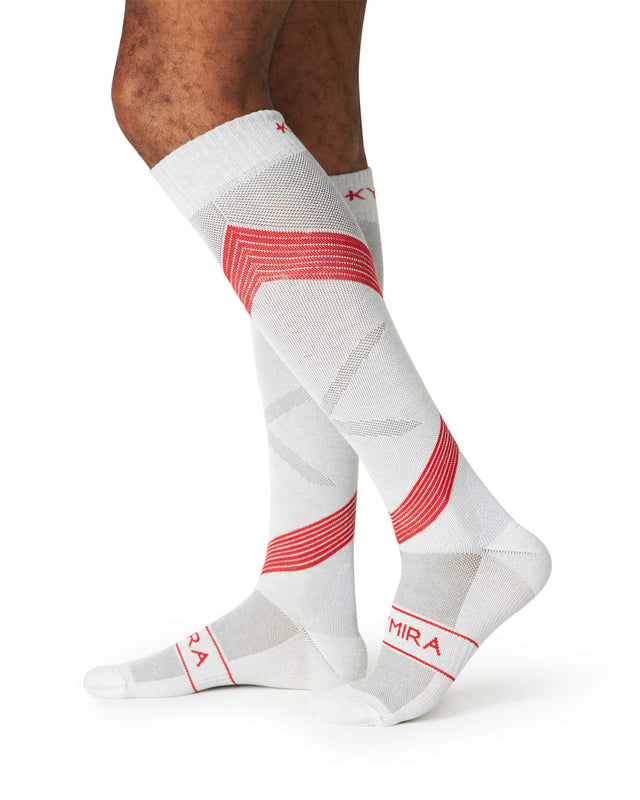
Move hourly; use compression socks + light ankle circles (mix with KYMIRA infrared, these are clinically certified as a circulation medical device).
Avoid alcohol and heavy meals.
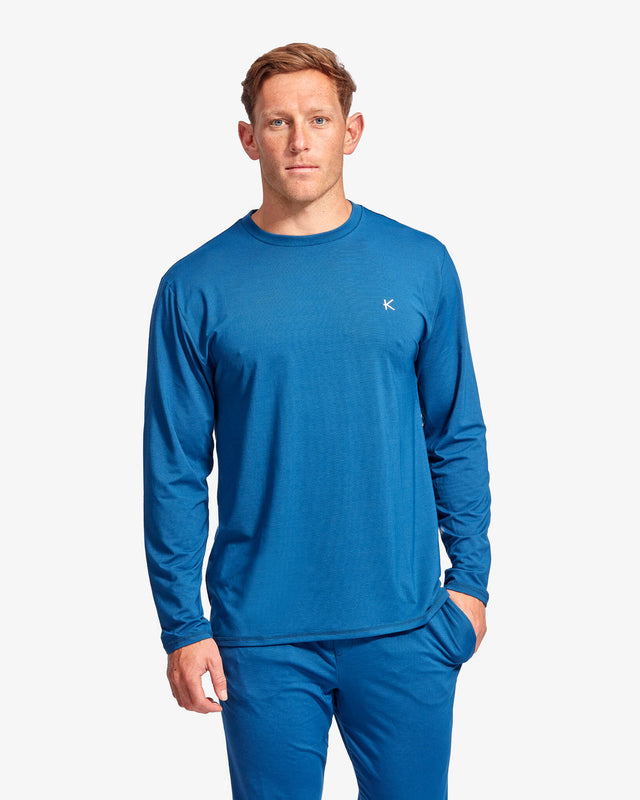
If sleep is possible, use eye mask + earplugs; consider KYMIRA base-layer top for microclimate comfort.
0–24 Hours Post-Arrival (Night Zero)
Upon landing: immediate sunlight exposure timed to destination (morning for eastward, afternoon/evening for westward).
No naps longer than 20 min.
Evening:
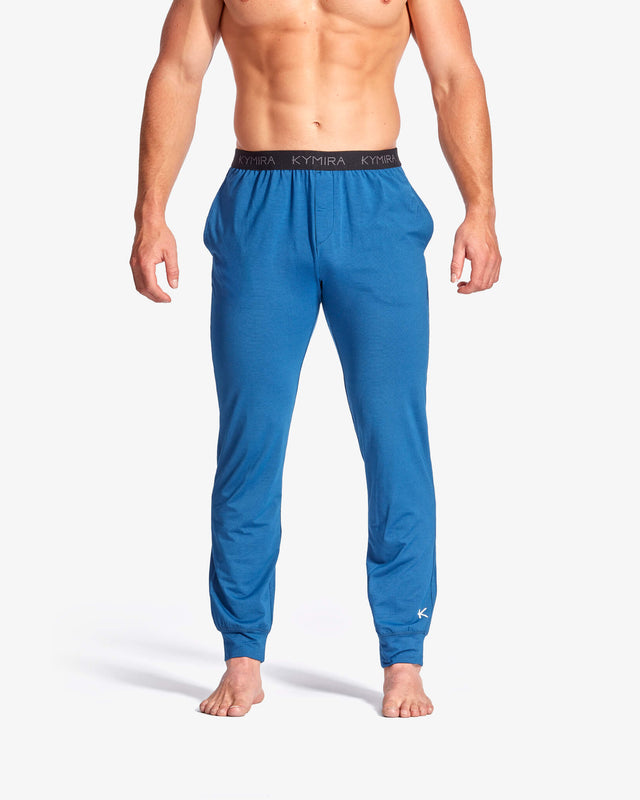
Full KYMIRA sleepwear set (top + bottoms). The fabric’s rapid vasodilation and heat-regulation effects begin working immediately to boost sleep efficiency even on the first disrupted night.
Hydration and light, balanced meal.
24–48 Hours (Day One / Night One)
Morning:
30–60 min outdoor light + light training or activation session.
Continue KYMIRA sleepwear every night — the cumulative effect on microcirculation accelerates waste clearance and reduces perceived soreness.
Monitor subjective fatigue; adjust training load downward 20–30 % if needed.
Evening wind-down: no screens 90 min before bed.
48–72 Hours (Day Two / Night Two)
Resume normal training intensity if sleep metrics (via wearable) are recovering.
KYMIRA remains standard nightly wear — data show peak neuromuscular recovery benefits at 48 h.
By hour 72, most athletes are back to baseline sleep architecture and performance readiness.
Key Protocol Notes
Prioritise KYMIRA on every night of the 72-hour window — it is the only tool that delivers measurable sleep-quality gains from the moment you pull it on, without waiting for circadian resynchronisation.
Track with a validated wearable (smart watch) to quantify the infrared advantage in real time.
Combine with standard hydration, nutrition, and light strategies — infrared enhances rather than replaces them.
Recovery Stacking Protocols
-
Travel-Proof Your Recovery
Elite sport will always involve airports and hotel rooms, but it doesn’t have to mean
compromised sleep or sub-optimal performance.
By addressing the immediate physiological bottlenecks of thermoregulation and
circulation, KYMIRA infrared sleepwear gives athletes a practical, evidence-backed way to protect deep sleep and accelerate return to game-ready status.
Ready to make travel fatigue a thing of the past? Explore the KYMIRA sleepwear range here and build the 72-hour protocol into your next away fixture.
Sleep deeper. Recover faster. Arrive game-ready.