Marathon Build → Peak: The Top Strategies for Training, Recovery and Injury Prevention

Steve Hoyles
Completing a marathon has captured the attention of millions of runners worldwide. As
(arguably) the premier distance event of them all, it is seen as the ultimate running challenge.
The problem comes when you don’t train and recover properly.
To help you get this right, we’re going to look at evidence-based approaches for ramping up marathon training, enhancing post-run recovery and preventing injury when preparing for a marathon.
Approaching Marathon Training
Marathon season kicks off in the spring, with iconic races such as the Tokyo, Rome and
Barcelona Marathons in March, the London, Boston and Paris Marathons in April, and the Prague and Stockholm Marathons in May.
This calendar allows for an early-year build phase, meaning marathon runners across
are hitting their peak training blocks in time for marathon season. For the experienced runners, this timing is perfect. For first-timers, this can go wrong.
Building Volume and Specificity Without Breaking Down
Marathon running plans generally align around 12–20 week cycles for major marathons.
The plan always starts with shorter runs, increasing in length to build volume over
time. The long-run volumes typically crest in February–March for northern-hemisphere spring races, allowing 8–12 weeks of progressive build before the all-important taper.
Key findings from training volume studies show that a spike (>10% in single-session running distance) significantly increased the rate of overuse running-related injuries, with the risk sharply rising when the distance more than doubled. [1]
This is where smart training, injury-proofing, and accelerated recovery separate PBs
from DNFs. Using KYMIRA infrared fabrics helps with performance during the run
and the critical post-run repair window.
Research from 2015 titled ‘Apparel with Far Infrared Radiation for Decreasing an Athlete's Oxygen Consumption during Submaximal Exercise’ [2] showed that during
exercise, athletes wearing infrared garments consumed less oxygen, making them more efficient. They’re able to work for longer without fatiguing.
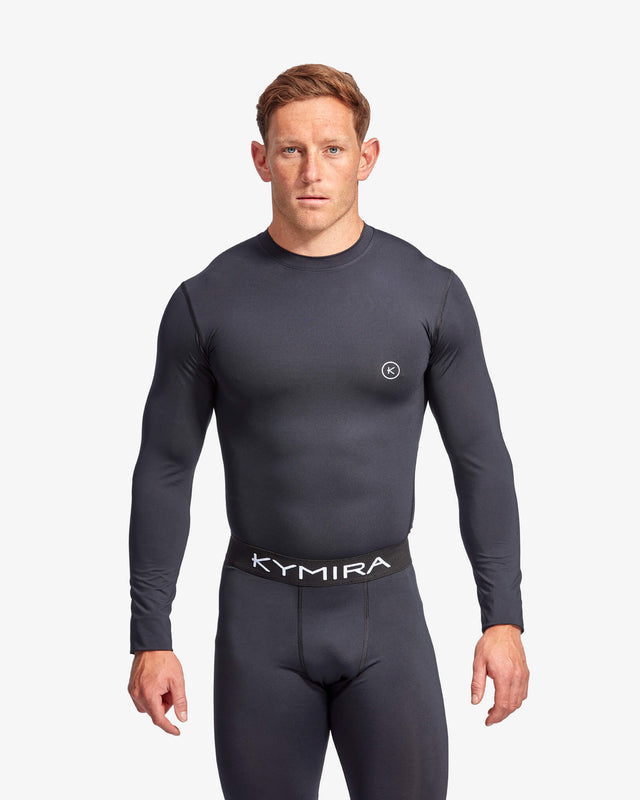
KYMIRA base layers contain the infrared technology, increasing local circulation and
tissue elasticity, reducing strain during long runs. All these benefits come simply from wearing the garments during and after training.
Here are the key principles from marathon training plans to improve fitness and aid long‑run recovery…
- Progressive long runs: Increase weekly long-run distance by no more than 10% (the golden rule to avoid overuse). [1]
- Peak long runs hit 32–35 km in the final weeks of the programme
- Key sessions: 80/20 rule – 80% easy aerobic, 20% quality (tempo, intervals, marathon-pace work)
- Strength & mobility: 2–3x weekly glute, core, and calf work. Single-leg exercises prevent imbalances that plague marathoners
Marathon Recovery: How Infrared Accelerates Post-Run Repair
According to research, around 70% of marathon injuries are from overuse. Common
complaints include IT band syndrome, soft tissue injuries, shin splints, plantar fasciitis and general joint pain. [3]
Some of this can be explained through training, but another reason injury rates are
high in distance running is due to under-recovery.
A 2024 study titled Incidence and Biomechanical Risk Factors for Running-Related Injuries: A Prospective Cohort Study [4] showed that injury incidence was 8.1 per 1,000 hours, which is very high.
If we accept that increasing distance comes with risk, then the inverse must be true. We can reduce injury risk by improving the quality of rest.
Post-run recovery includes inflammation control and tissue repair.
How KYMIRA Infrared Enhances ATP Production
Our KYnergy infrared-emitting fabrics (embedded bio-ceramics) reflect your body’s
own far-infrared energy back into tissues. Independent studies show:
- Improved local circulation: tcPO₂ (transcutaneous oxygen pressure) rises significantly within 90 minutes of wear, up to 6.7% higher than control garments. More oxygen = faster repair. [5]
- Reduced muscle damage markers: A landmark study on far-infrared emitting clothing post-eccentric exercise showed significantly lower CK levels, less soreness, and faster recovery vs placebo. [6]
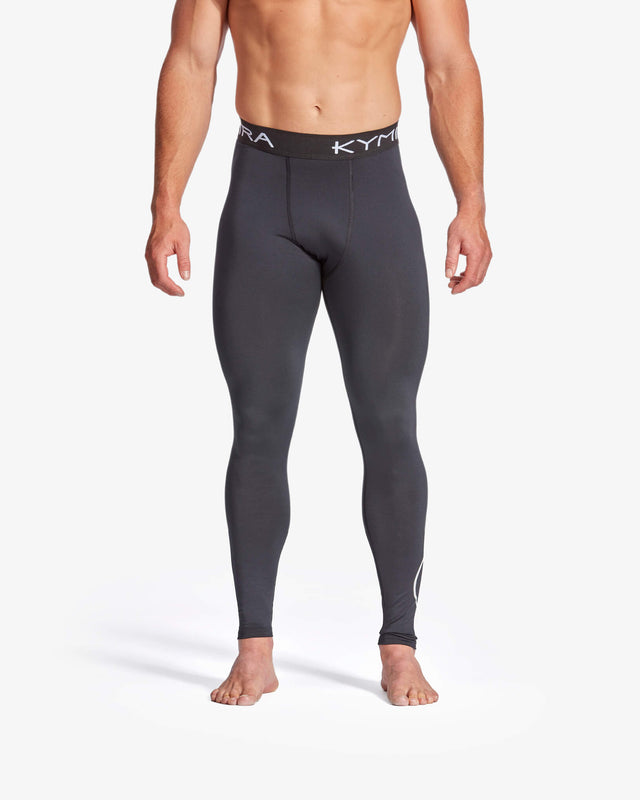
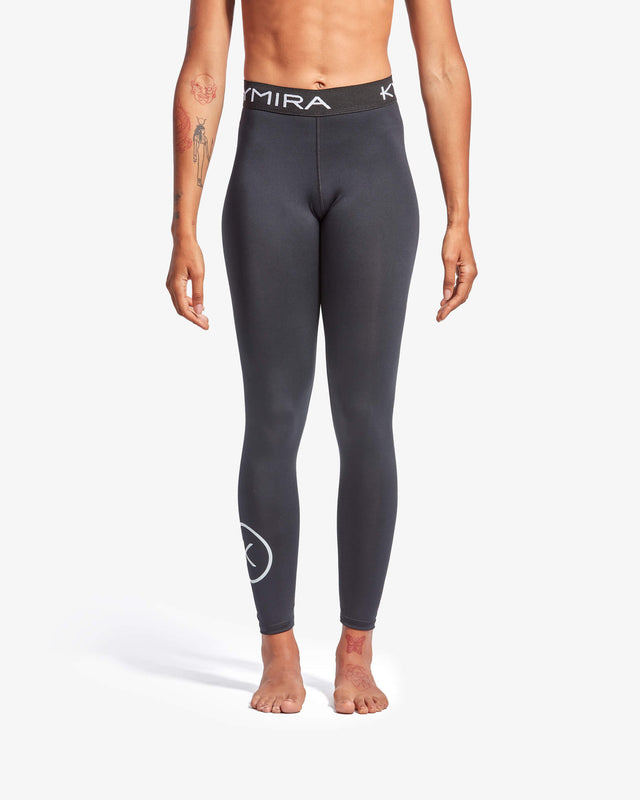
- Synergistic recovery stack: Combine infrared + carbs + light compression. A major meta-analysis found compression garments accelerate recovery of strength and power, while carbs restore glycogen. KYMIRA tights and socks deliver both infrared AND graduated compression – the ultimate post-run protocol. [7]
The combination of infrared clothing during and post training, coupled with compression, helps to repair tissues and control inflammation. Add the post-run carbs and rehydration to refuel ahead of the next session.
KYMIRA Marathon Training & Recovery Collections
There’s an extensive range of clothing available, so what are the best for marathon runners? Here’s our take…
1. Long-Run Base Layers – stay warm, dry, and oxygenated on 30 km+ efforts.
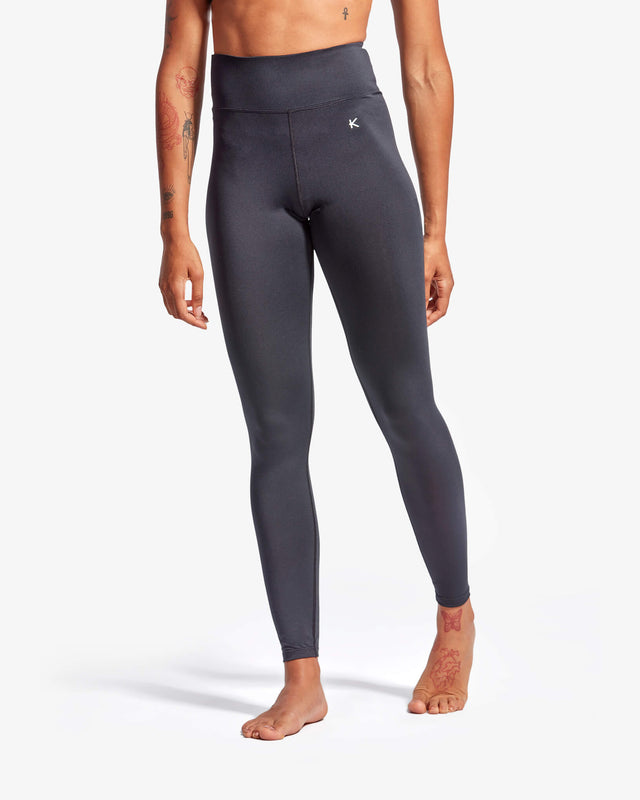
2. Recovery Range – leggings, hoodies, and shorts clinically proven to cut DOMS and inflammation.
3. Sleepwear – for deeper recovery between sessions.
Try the Long‑Run Recovery Kit
Perfectly designed for marathon runners: infrared leggings + base layer + compression socks.
Clinically proven to accelerate repair, reduce soreness, and get you back on the road faster.
Shop the Long-Run Recovery Kit now at kymira.com and feel the difference.