


Sleep in the Heat:
How Infrared Thermoregulation Improves Summer Nights

Steve Hoyles
Struggling to sleep in the heat isn’t imagination, and it's not weakness. Hot nights genuinely damage sleep quality in ways that are measurable, well-documented, and physiologically significant.
The problem is rooted in the way your body is designed to fall and stay asleep - a process that depends critically on temperature - and summer disrupts it at the source.
What most people don't know is that the answer isn't just a fan or a lighter duvet.
There's a smarter solution — one that works with your body's natural thermoregulatory processes rather than simply trying to cool down the room around you. That's exactly what KYMIRA Sleepwear is designed to do.
Why Heat Ruins Your Sleep: The Science
Sleep isn't a passive state. It's an active, tightly regulated biological process, and
temperature is one of its primary control signals.
To initiate sleep, your core body temperature needs to fall. This isn't optional
physiology: it's a fundamental requirement for sleep onset. As the evening progresses, your circadian system triggers a redistribution of heat from your body's core to its periphery. Your hands, feet, and skin surface receive more blood flow, allowing core temperature to drop.
This peripheral heat dissipation is directly coupled with melatonin release and the
onset of sleepiness.
Research published in Sleep Biology Rhythms has confirmed that heat loss,
measured via the distal-to-proximal skin temperature gradient, is the single best predictor of sleep onset latency. It outperformed core body temperature,
heart rate, and even melatonin onset as a variable. [1]
In plain terms, the faster and more efficiently your body can lose heat through your
skin, the faster you fall asleep.
The research shows that heat loss through distal skin regions (particularly the feet) is a key mechanism for triggering sleepiness as core temperature declines. This is why warm feet genuinely help you fall asleep faster: they signal efficient peripheral heat dissipation, which in turn facilitates the
core temperature drop your brain needs to initiate sleep.
Hot summer nights disrupt all of this. When the ambient temperature is elevated, your body struggles to offload core heat effectively. The result is increased wakefulness, reduced slow wave sleep (SWS), longer sleep onset latency, and
more frequent awakenings throughout the night.
Higher temperatures activate the body's thermoregulatory stress response, triggering central neuronal activity that promotes arousal, the opposite of what sleep requires.
A study published in 2019 found that sleep quality at 26°C was significantly higher
than at 30°C, 36°C, or 38°C. At the two highest temperatures, subjects reported
difficulty falling asleep, with meaningful reductions in both total sleep time and the duration of restorative slow-wave sleep. [2]
In other words, your bedroom temperature isn't just about comfort. It's directly shaping
the quality and depth of your sleep every night.
What Makes KYMIRA Sleepwear Different
Most sleepwear is designed to be soft, breathable, or moisture-wicking. These are
useful properties, but they're fundamentally passive. They respond to what's already happening to your body rather than actively supporting the processes that govern sleep quality.
KYMIRA takes a different approach entirely.
KYMIRA's proprietary KYnergy bioceramic technology is woven directly into the fabric of our Sleepwear range. These bioceramic minerals absorb the body's natural heat and convert it into far-infrared (FIR) energy, which is then emitted back into the body's
tissues.
The result is a dynamic, responsive system that works continuously throughout the night, not just reacting to conditions, but actively influencing the physiological
processes that determine how well you sleep.
This isn't a gimmick or a marketing claim. It's a mechanism backed by a growing body of peer-reviewed science.
The Far-Infrared Difference: Circulation, Thermoregulation, and Recovery
Far-infrared energy occupies a specific bandwidth of the electromagnetic spectrum —
wavelengths between 3 and 1000 micrometres — that penetrate the skin and
interact with biological tissue in ways that visible heat cannot.
Evidence shows that FIR produces both thermal and non-thermal biological effects,
including increased blood flow, vasodilation, improved endothelial function, reduced blood pressure, and promoted capillary dilatation. [3]
The thermal effects are particularly relevant to sleep. Research from 2024 has demonstrated that FIR clothing promotes vasodilation in muscles, thereby increasing
peripheral oxygen delivery and blood flow. This is the same peripheral circulation that drives the heat dissipation your body needs at sleep onset. [4]
The connection between FIR, peripheral circulation, and sleep is direct: by gently
promoting vasodilation and enhancing blood flow through the body's surface tissues, KYMIRA Sleepwear supports the body's natural process of redistributing heat from core to periphery. It doesn't cool you down artificially. It helps your body do what it's designed to do more efficiently.
This is particularly important when elevated ambient temperatures make peripheral heat loss harder to achieve. KYMIRA Sleepwear doesn't fight against the heat; it works with your physiology to maintain the thermal gradient your body needs.
What the Research Says About FIR Sleepwear
The science on far-infrared clothing and sleep is increasingly compelling.
A pilot randomised controlled trial published in MDPI examined the effects of FIR-emitting pyjamas on sleep quality in 40 participants with poor sleep. [5]
Participants wearing the FIR garments showed meaningful improvements in physical fatigue scores compared to the placebo group. The study also referenced earlier research showing that sleeping on FIR-emitting bedsheets was associated with
fewer insomnia symptoms in healthy adults compared to a placebo sheet.
A study published in 2024 explored the effects of FIR-emitting garments on
thermoregulation and autonomic nervous function during sleep. The researchers
specifically hypothesised that the garments would support a proper reduction of
core body temperature during sleep, improve sleep quality variables, and
promote healthy sympathovagal balance.
Tympanic membrane temperature, sweating rate, skin temperature, humidity, sleep stages, and heart rate variability were all monitored throughout.
The researchers concluded that “results suggest that sleeping with FIR in comparison to with control, has a beneficial effect to facilitate restorative sleep, presumably involving proper thermoregulation.” [6]
Beyond sleep specifically, research has found that bioceramic FIR garments worn during recovery periods after exercise significantly improved neuromuscular recovery and perceptual markers compared to a placebo — demonstrating that FIR clothing does meaningful biological work throughout the night, not just at sleep onset. [7]
Summer Nights, Solved: KYMIRA Sleepwear Bundles
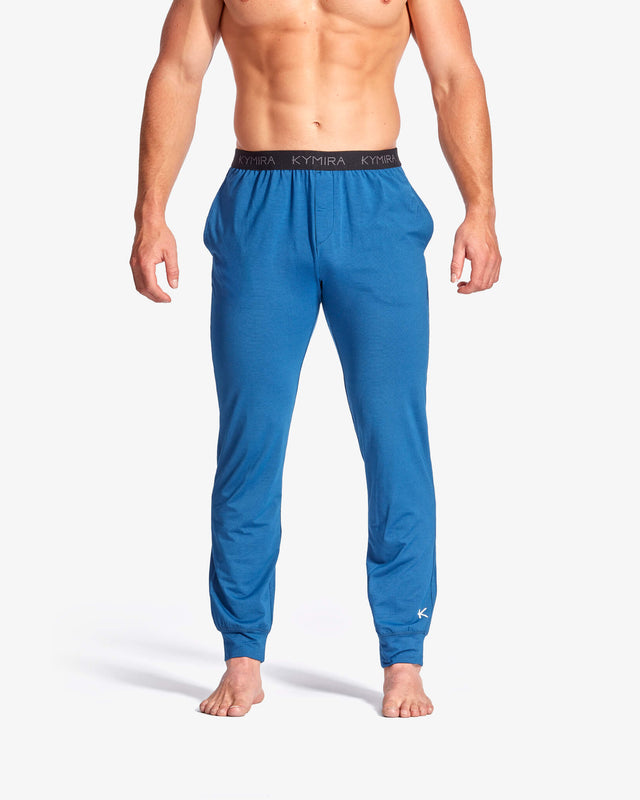
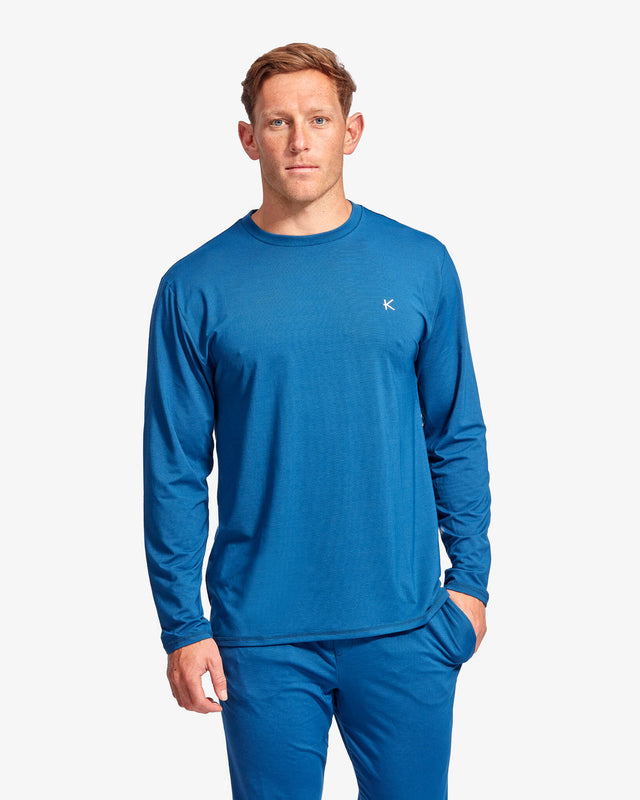
Our Sleepwear bundles pair KYMIRA's KYnergy-infused tops and bottoms to give you complete coverage — maximising the surface area through which FIR energy is delivered to your tissues throughout the night. Whether you struggle with summer heat disrupting your sleep, find yourself waking more frequently in warmer months, or simply want to make the most of every hour of rest, KYMIRA Sleepwear bundles are built around the science of what sleep requires.
Key benefits of KYMIRA Sleepwear:
- Supports peripheral vasodilation to assist the body's natural core temperature drop at sleep onset
- Enhances circulation throughout the night for improved tissue oxygenation and recovery
- Addresses the primary physiological challenge of sleeping in the heat — impaired peripheral heat dissipation
- Works continuously whilst you sleep, with no effort required
- Backed by research into both far-infrared thermoregulation and FIR-specific sleepwear trials
For athletes, this means overnight recovery is no longer just about passive rest —
it's an active process supported by clinically informed technology. For anyone who wants to sleep better through the summer months, it's the most scientifically grounded solution available.
No other mainstream sleepwear brand uses bioceramic far-infrared technology of this
kind. That's not a marketing distinction — it's a fundamental difference in what the product can do for your body whilst you sleep.
The Bottom Line
Hot nights are hard on sleep because sleep itself is a temperature-dependent process.
KYMIRA Sleepwear addresses this at the physiological level, using far-infrared
technology to support peripheral circulation, promote the vasodilation that underpins natural thermoregulation, and give your body the conditions it needs to do what it's designed to do -fall asleep faster, sleep deeper, and recover more fully.
This summer, stop fighting the heat. Sleep smarter.
Try KYMIRA Infrared Sleepwear

References
[1] https://journals.physiology.org/doi/full/10.1152/ajpregu.2000.278.3.R741
[2] https://www.mdpi.com/1660-4601/16/2/270
[3] https://pmc.ncbi.nlm.nih.gov/articles/PMC4935255/
[4] https://www.sciencedirect.com/science/article/pii/S1043661824002949
[5] https://www.mdpi.com/1660-4601/20/5/3870
[6] https://www.biorxiv.org/content/10.1101/2024.06.13.598953v1