The Role of Nitric Oxide in Sports Performance
&
How Infrared Clothing Boosts It

Steve Hoyles
Nitric oxide (NO) is a key endogenous signalling molecule that plays a pivotal role in athletic physiology.
As a potent vasodilator, NO relaxes vascular smooth muscle, increases blood vessel diameter, and enhances microcirculation, thereby optimising oxygen and nutrient delivery to working muscles, while facilitating the removal of metabolic by products.
Intense training blocks, competition stress, and environmental factors can reduce NO bioavailability, making strategies that enhance circulation and increase tissue oxygenation particularly valuable for athletes.
In this article, we’re going to look at nitric oxide for performance and how using infrared clothing to enhance NO production can lead to multiple athletic benefits.
Fundamentals of Nitric Oxide in Sports Physiology
The enhanced circulation caused by increased NO reduces the oxygen cost of exercise, improves mitochondrial efficiency, supports better muscle contractility, and ultimately leads to improved endurance, higher power output, and faster recovery.
In other words, enhancing nitric oxide for performance underpins many of the qualities athletes are trying to develop.
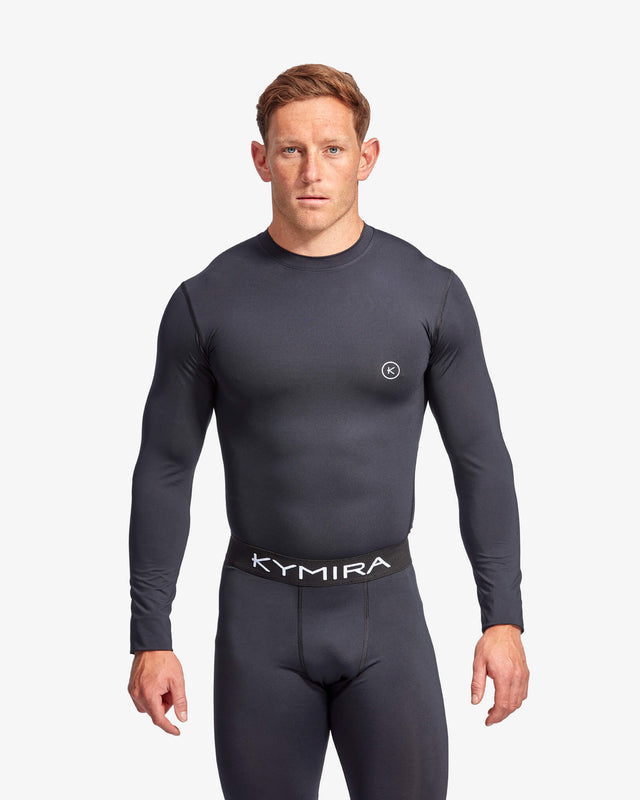
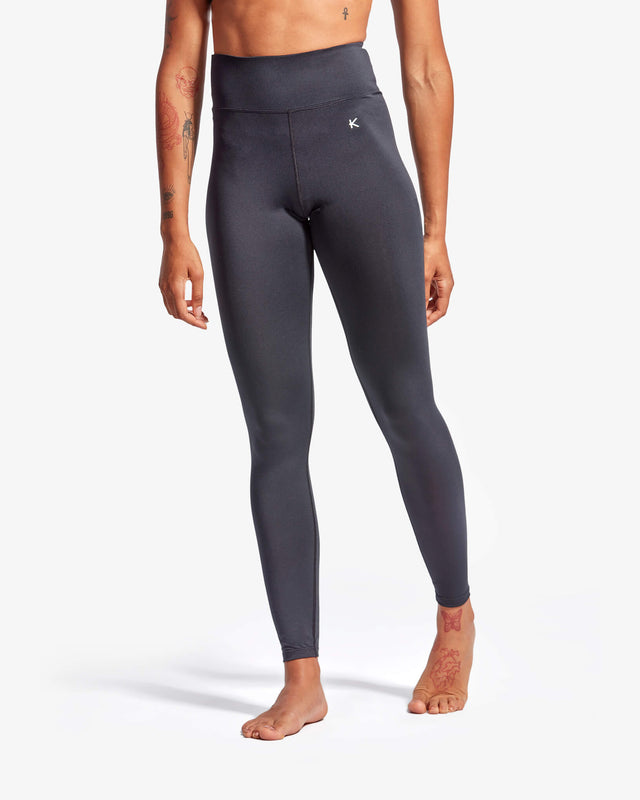
By embedding bio-ceramic minerals into the fabric, KYnergy fabric by KYMIRA absorbs body heat and ambient energy and re-emits it as targeted far-infrared (FIR) light in the 6–14 µm wavelength range. This wavelength penetrates soft tissues up to 4–5 cm, triggering biological responses including activation of endothelial nitric oxide synthase (eNOS).
The phosphorylation of eNOS accelerates the conversion of L-arginine into nitric oxide, resulting in sustained, localised increases in NO levels.
Research published in the Journal of Applied Physiology (1997) [1] demonstrates that this mechanism produces significant vasodilation and increases local blood flow in the covered areas — a direct example of infrared clothing circulation benefits in action.
Circulation Improvements and Associated Benefits for Sport
Improved circulation delivers more oxygen and nutrients to working muscles while clearing metabolites such as lactate more efficiently. This helps support aerobic capacity, delays fatigue and contributes directly to increased tissue oxygenation during both prolonged and high-intensity efforts. These conditions help to enhance ATP recovery during exercise, allowing athletes to work harder for longer.
Wearing KYMIRA garments primes muscles by elevating nitric oxide availability, improving tissue elasticity, reducing stiffness, and preparing the body for optimal performance with a lower acute injury risk [2].
Post-exercise, improved blood flow and nitric oxide’s anti-inflammatory effects accelerate waste clearance, reduce oxidative stress, and minimise delayed-onset muscle soreness (DOMS). These benefits position infrared garments as a powerful recovery agent, supporting faster neuromuscular and metabolic recovery.
A 2025 study from the University of Notre Dame examined the effectiveness of infrared garments in recovery from resistance exercise [3]. Recovery was assessed using countermovement jump (CMJ) performance metrics, fatigue biomarkers, and subjective recovery scores.
The researchers concluded:
“FIR garments may enhance neuromuscular recovery and subjective
recovery perceptions following resistance exercise, likely by improving
peripheral blood flow, metabolic clearance, and tissue oxygenation.”
These findings support the use of infrared garments as effective ATP recovery clothing, particularly following intense strength or power-based training.
Supporting Research on Infrared Clothing Circulation
In a 2021 study titled “Effect of FIR armbands on grip strength in subjects with chronic wrist and elbow pain” [4], participants were assigned either a placebo armband, or one made with infrared fabric.
Results showed:
- Placebo group: +7.8% increase in grip strength
- Infrared fabric group: +16.8% increase (p = 0.0372)
No adverse effects were reported. These improvements further highlight how enhanced nitric oxide signalling and infrared clothing circulation can support strength output, tissue function, and recovery.
Infrared Garments and Injury Prevention Potential
Increased nitric oxide availability also contributes to injury risk reduction. Improved circulation supports inflammation management, tissue repair, collagen regulation, and cellular proliferation at injury sites.
Infrared exposure has been linked to improvements in cellular healing rates (reported increases of 140–210%) [5]. Combined with better fatigue management and enhanced tissue oxygenation, this makes infrared garments valuable not just for performance, but for long-term resilience.
Performance gains stem from these combined effects: reduced perceived exertion, faster lactate clearance, improved power and velocity output, and greater overall training efficiency.
Conclusion
KYMIRA’s infrared technology provides continuous, localised nitric oxide enhancement through wearable garments, making it one of the most practical tools available for boosting nitric oxide for performance.
By improving infrared clothing circulation, increasing tissue oxygenation, and supporting ATP recovery processes, KYMIRA delivers tangible benefits across warm-ups, training sessions, competition, and recovery phases.
The effects are rapid and remain active as long as the garments are worn. By harnessing infrared to elevate nitric oxide at the cellular level, KYMIRA supports better circulation, tissue health, injury resilience, and athletic output.
For athletes and strength and conditioning coaches seeking an evidence-based edge, KYMIRA represents a compelling addition to modern performance and ATP recovery clothing systems.