Case Study: TEAM GB at the Milano Cortina 2026 Olympic Winter Games
Team GB's Use of KYMIRA Infrared Technology for Optimized Recovery During the Milano Cortina 2026 Olympic Winter Games

GREG RETTER
Head of Performance
Team GB
Recovery & Sleep
Daily use
INTRODUCTION
The Olympic Winter Games brings together the world's best winter sport athletes to compete in one of the most demanding environments in high-performance sport. In 2026, Team GB sent 55 athletes across 11 disciplines to compete in Milano Cortina.
Team GB has historically punched above its weight at the Olympic Winter Games despite operating without the extensive domestic winter sport infrastructure enjoyed by many competing nations.
The British Olympic Association is the National Olympic Committee responsible for delivering Team GB in the Olympic environment, and at each Olympic Games (summer and winter) we look to utilise evidenced-based innovative technologies to support our athletes with a performance advantage, thereby enabling them to compete at their very best when it matters most. Marginal gains matter in Olympic sport, where the difference between making a final, winning a medal, or finishing off the podium can often be measured in fractions of a second.
At Milano Cortina 2026, Team GB delivered its most successful Olympic Winter Games to date, winning five medals and recording an all-time record 24 top-10 finishes across a diverse range of sports. As part of its broader athlete support strategy, Team GB introduced KYMIRA infrared sleepwear across the athlete cohort.
THE PERFORMANCE CHALLENGE
All Team GB winter athletes implement highly refined sport-specific preparation and recovery practices.
However, Olympic competition presents unique challenges:
- Multiple competitions over short time periods.
- Travel between venues and training locations.
- Shared accommodation environments.
- Reduced opportunities for direct recovery supervision.
- The need to consistently perform under physical and psychological pressure in the full spotlight of the world’s media.
These demands vary enormously between the different sports; alpine skiing, biathlon, bobsleigh, cross-country skiing, curling, figure skating, freestyle skiing, short-track speed skating, skeleton, snowboard, and speed skating.
For example:
- Skeleton and bobsleigh athletes require explosive power outputs.
- Biathlon and cross-country athletes rely heavily on aerobic capacity and endurance.
- Curling athletes perform in extended concentration-based competitive environments.
- Freestyle skiing, snowboard and figure skating athletes must repeatedly deliver highly technical skills under pressure.
The challenge was therefore not simply recovery itself but identifying an intervention capable of integrating across multiple sports and supporting athletes without requiring changes to established practices.
WHY KYMIRA?
Sleep remains one of the most important recovery tools available to athletes and is particularly important within the challenging and congested Olympic environment.
Team GB already utilises a range of evidence-based recovery and performance support strategies. KYMIRA was attractive because it provided a low-burden solution that required no behavioural change, no additional recovery sessions, no additional staff burden, and no disruption to athletes' existing routines.
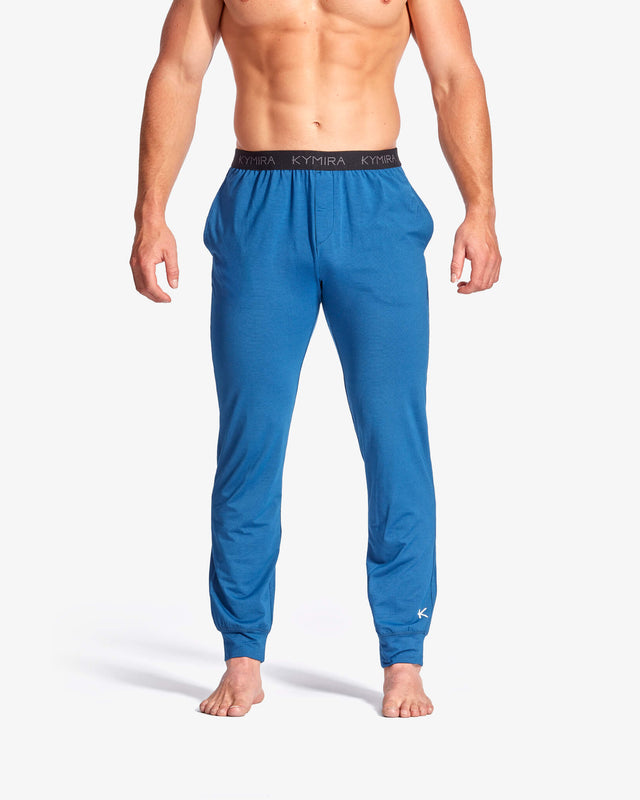
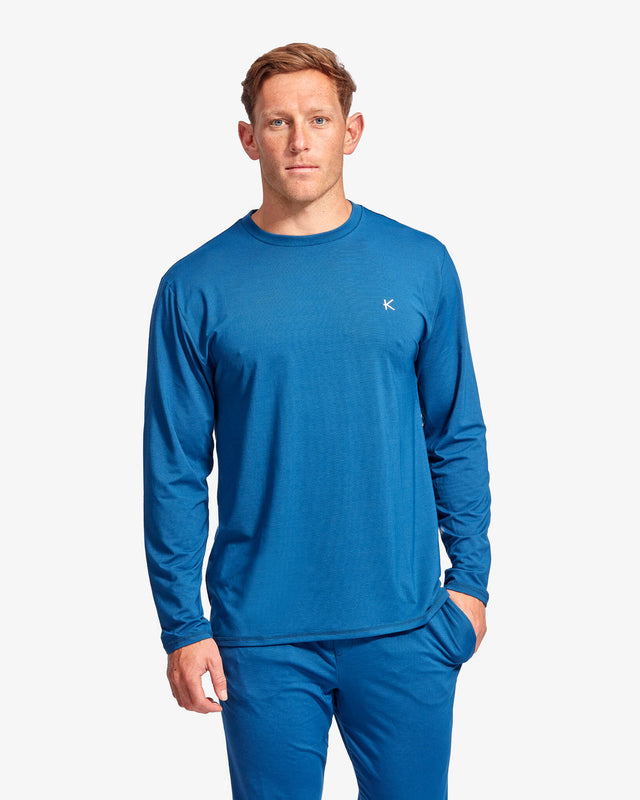
Our decision was informed by KYMIRA's growing body of scientific evidence and adoption in elite sport, particularly the recent emerging research being undertaken at Loughborough University by Richard Ferguson and Jack Bond, exploring the effects of infrared garments on performance, recovery and physiological adaptation, and this was enough to sway the pendulum toward an investment in the infrared technology woven into the fabric of KYMIRA pyjamas.
The first research study looked at the VO2 peak / gas exchange threshold in two experimental trials comparing IR garments to sham garments. The wearing of IR garments influenced the VO2 kinetic response to moderate intensity exercise, resulting in a reduction of O2 deficit and a reduction in fatiguing metabolite accumulation.
In a second study the effects of IR garments on recovery were studied by assessing muscle soreness / physiological muscle damage at several time points in two groups (IR garments versus sham garments) after an eccentric drop jump protocol.
The initial preliminary data showed promise with an improvement of the IR garment group versus sham in i) the participants perception of delayed onset muscle soreness (DOMS), ii) their maximum voluntary isometric contraction (as a percentage of their baseline), and iii) their countermovement jump (as a percentage of their baseline).
Whilst the study group numbers were low, the initial evidence was compelling enough to warrant further investigation of the value of infrared sleepwear within the Team GB environment.
We identified the KYMIRA pyjamas as an innovative way to have a positive impact on recovery and quality of sleep across our wide and varied group of athletes.
Importantly, KYMIRA represented a scalable solution that could be deployed across a highly diverse athlete population spanning explosive power sports, endurance disciplines, technical sports and precision-based events.

IMPLEMENTATION
Against this backdrop, we felt KYMIRA infrared pyjamas were a good fit for Team GB's Milano Cortina programme. The technology was deployed consistently
across the 55 athletes in 11 sports, regardless of the specific physiological
demands of each discipline.
Each athlete received two sets of infrared pyjamas as part of their Olympic kitting-out process, allowing them to become familiar with the garments before entering the Games-time environment.
The garments offered several practical advantages:
- No additional scheduling requirements
- No equipment setup
- No disruption to existing recovery systems
- High ease of use and athlete compliance
- Suitability for cold winter environments
- Long-term use beyond the Olympic Games
Importantly, athletes could incorporate the garments into routines they already followed, making adoption straightforward during a critical phase of preparation.
ATHELTE FEEDBACK
Whilst we did not undertake any formal analysis of the direct efficacy of the pyjamas due to the focussed and intense nature of the Games-time period, anecdotal feedback from athletes was that they liked them and had an overall perception of an improvement in the quality of sleep.
Adoption rates were high, athletes found them comfortable to wear and were readily proactive in using them as part of a passive overnight recovery strategy alongside their usual rigorous recovery regimes. Feedback included the positive perception of using cutting edge technology to support sleep and recovery, as well as feeling refreshed on waking, ready to continue competing each day.
RESULTS
Team GB delivered its most successful Olympic Winter Games in history, winning five medals and finishing 15th on the medal table. This included three gold medals in men’s skeleton, mixed team skeleton, and mixed team snowboard cross (Team GB’S first ever on snow); silver in the men’s curling team event, and bronze in the women’s freestyle skiing halfpipe event.
Alongside this Team GB athletes came away with 24 top-10 finishes across a variety of disciplines, an all-time record and a sign of the depth of talent across all winter sports.
Our implementation of KYMIRA infra-red pyjamas added to our overarching drive to leverage marginal performance gains in the complex and highly competitive Olympic environment.